The Splendid Tradition of the Esala Perahera
Each year, when the full moon of Esala rises above the hills of Kandy, the city transforms into the stage for one of Sri Lanka’s most extraordinary cultural celebrations. Known as the Esala Perahera, or the Festival of the Sacred Tooth Relic, this spectacular procession honours the sacred tooth relic of the Buddha. Filled with colour, music, devotion, and centuries of tradition, it stands among the oldest and most elaborate Buddhist festivals in the world. For both Sri Lankans and international travellers, witnessing the Esala Perahera is an unforgettable experience that captures the spiritual heart of the island.
The festival takes place annually in July or August and unfolds across ten remarkable nights. Each evening grows more vibrant and elaborate than the last. At the centre of the celebration is the Temple of the Tooth Relic, known locally as Sri Dalada Maligawa, which houses the revered relic believed to be a tooth of the Buddha. The grand procession is held as an act of devotion and as a symbolic prayer for blessings such as rainfall, prosperity, and harmony for the nation.
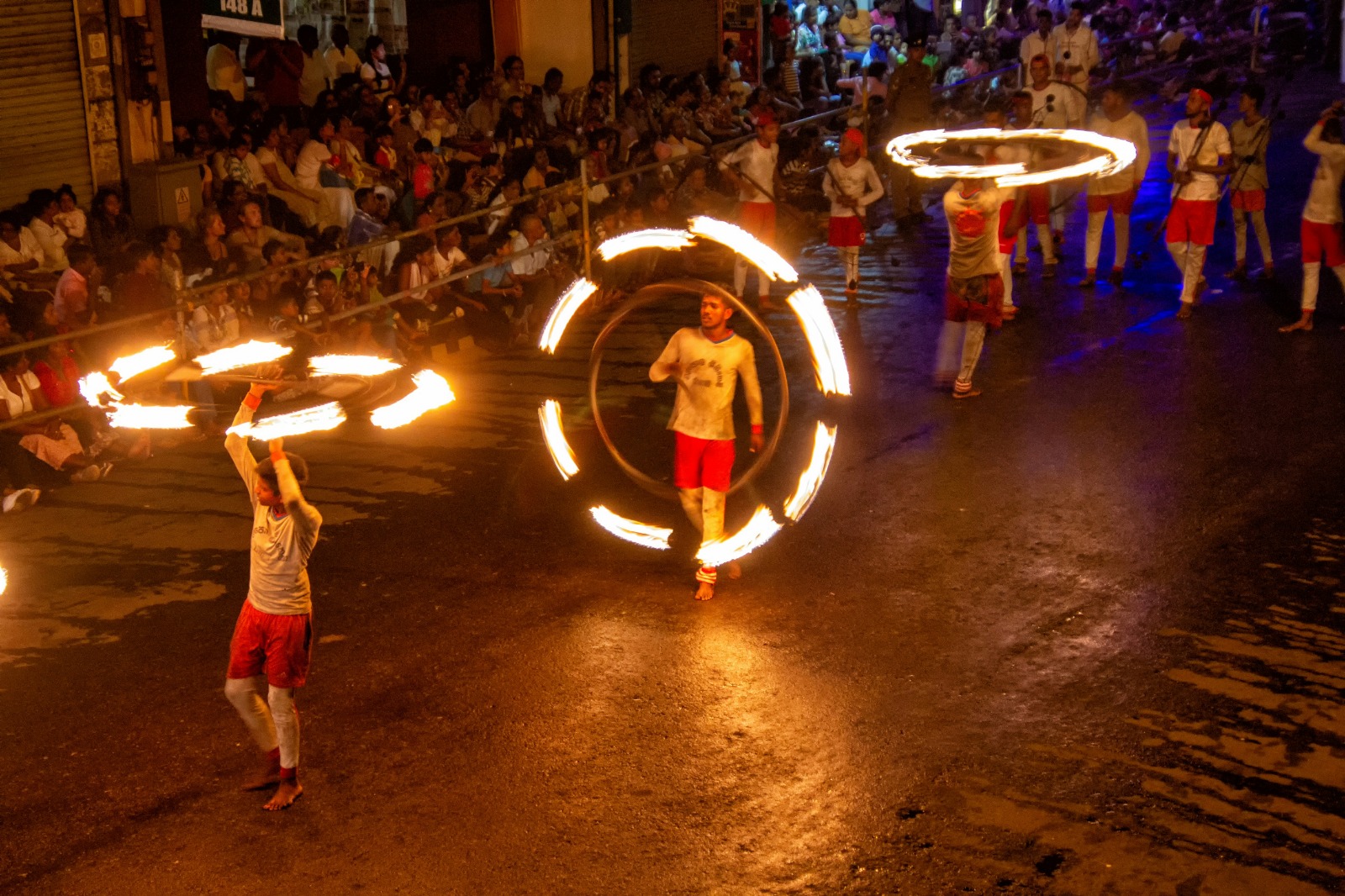
As darkness settles over Kandy, the city comes alive with torchlight, rhythmic drumming, and the sounds of traditional flutes. The streets fill with performers, dancers, musicians, and beautifully decorated elephants, all moving together in a carefully choreographed procession. Whip crackers lead the parade, their sharp rhythmic sounds clearing the path, followed by drummers and dancers performing traditional routines that have been preserved for generations.
One of the most awe-inspiring moments of the procession is the appearance of the Maligawa Tusker. This majestic elephant carries the golden casket known as the karanduwa, which symbolically represents the Sacred Tooth Relic during the procession. The tusker is dressed in an elaborate costume adorned with lights, embroidery, and decorative ornaments, transforming the gentle giant into a breathtaking symbol of reverence. As it passes, many devotees bow their heads in silent prayer.
The Esala Perahera itself unfolds in stages. The first five nights are known as the Kumbal Perahera, when the processions begin on a smaller scale and gradually build momentum. The following nights form the Randoli Perahera, historically associated with royal traditions and grand ceremonial displays. During these nights the parades become increasingly magnificent, featuring more performers, musicians, and elaborately decorated elephants. The final night, often called the Grand Perahera, is the most spectacular of all, bringing together the full splendour of the festival.
The origins of the Esala Perahera can be traced back many centuries, with traditions linked to ancient Sri Lankan kingdoms. Historically, the procession was believed to bring divine blessings to the land when the sacred relic was paraded through the city. Over time, the festival evolved to incorporate both Buddhist and Hindu traditions. Shrines dedicated to the four guardian deities—Natha, Vishnu, Kataragama, and Pattini—each hold their own processions, contributing distinctive costumes, rituals, and music to the larger celebration.
What truly makes the Esala Perahera unique is the powerful spiritual atmosphere surrounding the event. For many Sri Lankans, it is not simply a cultural performance but an act of deep devotion. Performers often participate after undergoing spiritual preparation, and many locals observe religious practices or acts of merit in the days leading up to the festival. Being part of the Perahera, whether as a performer or supporter, is considered a great honour.
Visitors planning to witness the Esala Perahera should make arrangements well in advance, as Kandy becomes a popular destination during the festival season. Hotels and viewing areas along the parade route are quickly booked, and many travellers secure reserved seating through tour operators or local hotels. Since the Perahera is a sacred event, visitors are encouraged to dress modestly and observe the proceedings respectfully.
For photographers and cultural enthusiasts, the festival offers an incredible array of moments to capture—from the graceful movements of Kandyan dancers to the thunderous rhythm of ceremonial drums echoing through the streets. Yet beyond its visual beauty lies something deeper. The Esala Perahera represents a living tradition that connects generations, preserves ancient customs, and celebrates the spiritual heritage of Sri Lanka.
As the final procession fades into the night and the torches slowly dim, the spirit of the Esala Perahera remains. It is more than a festival; it is a powerful expression of faith, culture, and history. Under the glow of the Esala moon, the streets of Kandy become a place where devotion, tradition, and community unite in one unforgettable celebration.