Flavours of the Village: Discovering Sri Lanka’s Hidden Culinary Traditions
Beyond the busy beaches and lively city markets, the true spirit of Sri Lanka can be found in its villages. Life here moves at a gentle pace, and traditions are carefully preserved—especially when it comes to food. For travelers who enjoy exploring culture through cuisine, stepping into a village kitchen is one of the most authentic ways to experience the island.
In these homes, cooking is far more than a daily routine. It is a tradition rooted in family and heritage. Recipes are rarely written down; instead, they are passed from one generation to the next, taught with patience and pride by mothers and grandmothers. A culinary journey through Sri Lanka’s countryside therefore becomes much more than a tasting experience—it is a meaningful connection to the island’s living culture.
While many journeys begin in cities such as Colombo, Kandy, or Galle, the real magic unfolds once you leave urban life behind. Travelling through the lush landscapes of rural Sri Lanka—past misty hills in Matale or endless green paddy fields in Uva—you arrive in peaceful villages where daily life follows a calm and natural rhythm. Visitors are welcomed warmly, and many families open their kitchens with genuine hospitality.
You may find yourself in a small home surrounded by banana trees, watching a grandmother prepare crispy jackfruit cutlets over a traditional firewood stove. In another village, a mother and daughter might show you how to make coconut rotis on a hot griddle. There are no restaurant decorations here—only the comforting aromas and honest flavors of home-cooked meals.
What makes village cooking so special is the care given to every step. Most ingredients come straight from the garden or nearby farms. Fresh coconut is grated by hand, spices are ground on stone grinders, and clay pots simmer slowly over open flames. This unhurried approach not only creates rich flavours but also reflects a deep respect for ingredients and tradition.
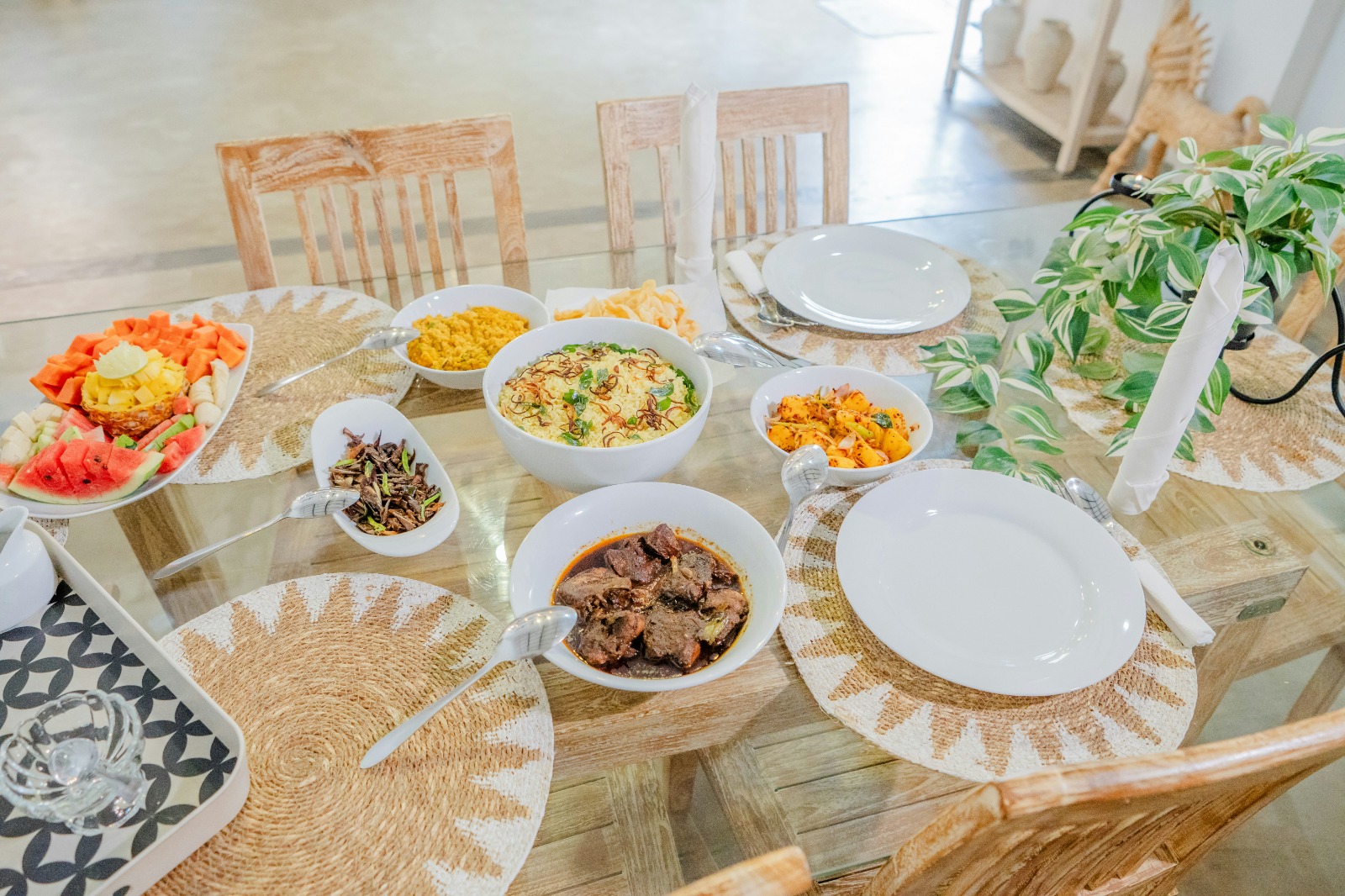
One of the most memorable moments for visitors is helping prepare a traditional Sri Lankan lunch. You might mix freshly grated coconut with chili to create pol sambol, stir a pot of red lentil dhal curry, or gently cook mallung with leafy greens and coconut. A fragrant plate of steamed rice is often accompanied by jackfruit curry, spiced vegetables, and other flavourful dishes—each connected to local seasons and traditions.
Meals are usually enjoyed together in a relaxed setting, often seated on mats or low stools. Eating by hand, as locals do, creates a closer connection to the food. Hosts happily encourage guests to take second servings, and the meal quickly turns into a shared moment of warmth and friendship.
Sri Lanka’s diverse cultures also bring unique flavours to village cuisine. In northern Tamil communities, you may taste seafood curries enriched with palmyrah flour and soft steamed pittu. In the hill country, dishes often include wild greens and preserved meats. Along the southern coast, fish curries are flavoured with tamarind and roasted spices. Muslim households may offer fragrant biriyani, spicy pickles, and the beloved dessert wattalappam.
Yet these experiences are about far more than food. Visitors often learn how cooking connects to religious rituals, family celebrations, and traditional healing practices. You might hear songs during preparation or witness a small offering made before a meal begins. Conversations flow easily, with hosts curious about your culture while encouraging you to try grating coconut or wrapping food in banana leaves.
If you plan to enjoy this type of experience, it is best to join tours that work closely with local communities. Dress respectfully, always ask before taking photographs, and approach the experience with curiosity and appreciation. Bring a notebook if you wish to remember new recipes or ingredients—and most importantly, take your time.
Long after the spices fade, what travellers remember most are the people: the grandmother sharing her cooking wisdom, the child helping stir the pot, and the farmer whose harvest made the meal possible. In these kitchens, Sri Lanka’s culture remains alive, its traditions carefully preserved, and its hospitality generously shared.
For travellers seeking authenticity, Sri Lanka’s hidden village kitchens offer far more than a meal. They offer a true taste of the island—rich in flavour, heritage, and heartfelt connection.